Psychology of Ceilings: How Studio Height Shapes a Shoot
High, low, or mid-height ceilings change how subjects move and how light behaves. A guide to choosing the right studio ceiling for your next shoot.
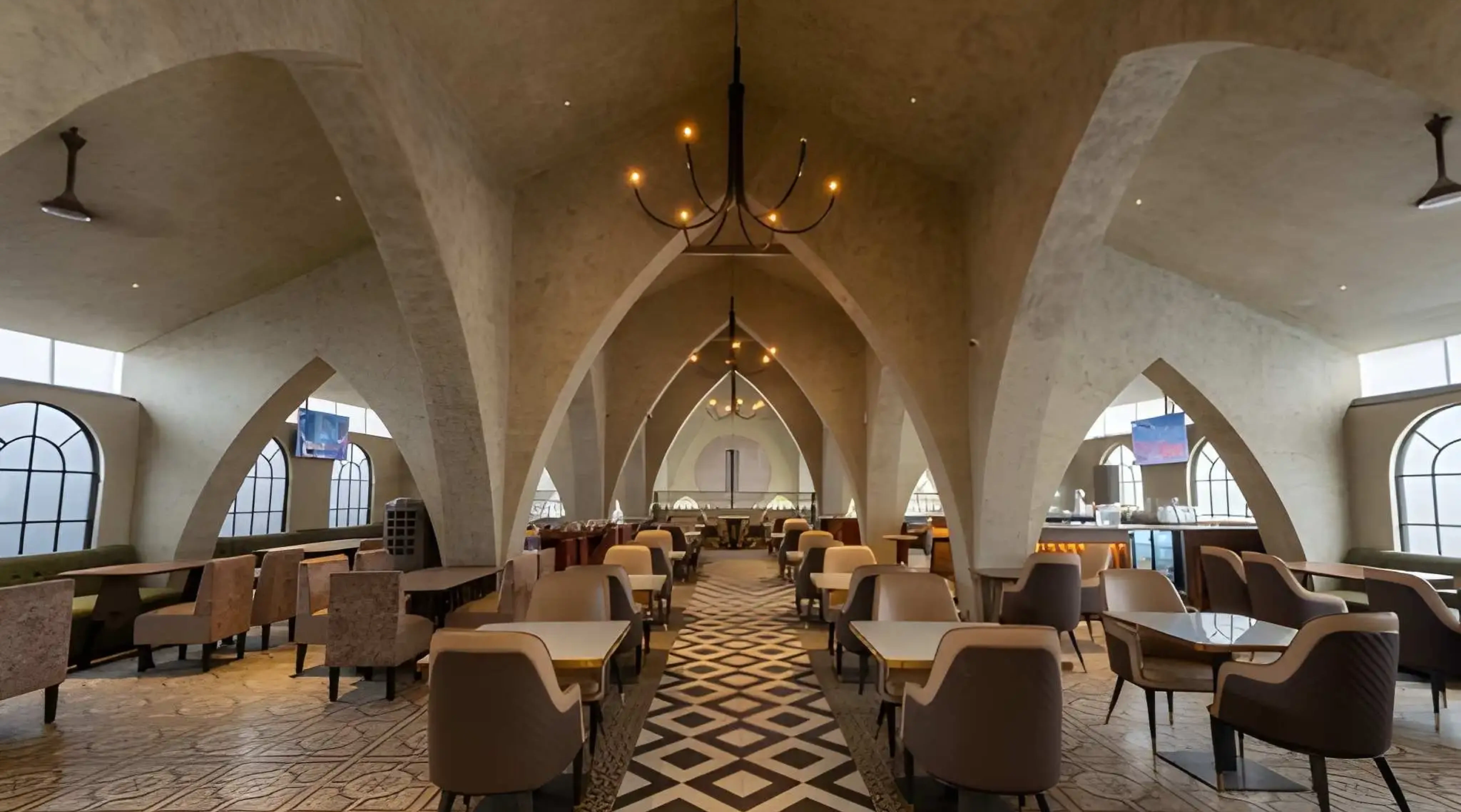
There’s a reason your best shoot happened in that warehouse.
And it’s not because the light was perfect, or because you finally nailed your settings, or because the subject happened to be relaxed that day. It’s because of what was above you. Fifteen feet of open air, exposed steel, the faint echo of your footsteps. The ceiling, or the near-absence of one, changed how everyone in that room felt. And that feeling made it into the frame.
This is not metaphor. This is architecture doing its job on your nervous system.
High ceilings: permission to expand
Walk into a cathedral, a loft, a converted factory floor. Within seconds, something in your chest opens. Psychologists call this awe, a response triggered when our environment exceeds what we expected. Researchers at the University of Minnesota found that people in high-ceilinged rooms were measurably more creative, more abstract in their thinking, and more likely to make connections between unrelated ideas.
For creators, this translates directly.
High ceilings give subjects permission to take up space. They shift body language, shoulders drop, posture opens, movement becomes less self-conscious. The subject doesn’t feel watched, they feel situated. And that’s an entirely different kind of portrait. It’s the difference between a photo of someone and a photo of someone being somewhere.
Book high-ceiling spaces when you’re shooting editorial or lookbook content that needs to feel expansive, when your subject is nervous or guarded (the openness disarms them), when you want negative space to do compositional work, or when the brief calls for “effortless” or “elevated”, words that are secretly about verticality.
Low ceilings: pressure that becomes intimacy
Now walk into a basement bar at 11pm. A reading nook. A recording booth. Something compresses, not uncomfortably, but deliberately. Low ceilings create what environmental psychologists call enclosure, and enclosure triggers intimacy, focus, and in the right context, a beautiful kind of tension.
This is why the best portraiture sometimes happens in the least likely places. A cramped kitchen. A narrow corridor. A room that forces two people closer together than they’d naturally choose. The environment does the emotional work you can’t direct.
Low-ceiling spaces also do something specific to light. It wraps differently. Bounces back faster. Creates a warmth that a cavernous studio will fight you on for hours.
Book low-ceiling spaces when you’re going for something raw, real, or emotionally loaded, when you want your subject to feel grounded rather than exposed, when you’re shooting couples or friends where closeness is the point, or when the brief has words like “cozy,” “candid,” or “authentic”, which really mean enclosed.
The middle ground nobody talks about
Standard room height, 8 to 10 feet, is the most commonly available and the most creatively neutral. It’s the visual equivalent of a shrug. Not expansive enough to trigger awe, not intimate enough to create tension. Most people book these spaces by default, which is exactly why their content looks like everyone else’s.
The move here is to actively work against the neutrality. Shoot low. Compress the frame. Find the corner where the ceiling actually matters. A neutral-height room shot from the floor becomes a low-ceiling room. Shot toward a window with the ceiling cropped out entirely, it disappears. The space is a constraint you negotiate, not a given you accept.
What to actually ask when scouting a space
Most booking platforms show you floor plans, not section drawings. You’ll see square footage before you ever see ceiling height. Here’s how to think about it before you commit.
Ask the host directly: “What’s the ceiling height, and does it vary across the space?” Many interesting spaces have different heights in different zones, a dropped section over a kitchen, an open void above a staircase. That variation is compositional gold.
Look at the photos critically. If the host’s listing photos are all shot at eye level with a wide lens, that’s usually because the space looks better that way, and worse from below. If they’ve included low angles showing the ceiling, the space is confident in what it offers.
Think about your light source. Natural light coming from the side reads differently under a high ceiling versus a low one. The higher the ceiling, the more control you have. The lower, the more the light wraps and saturates. Neither is wrong. Both are choices.
The room is already directing you
The best photographers and content creators understand something that less experienced ones miss: the space is never neutral. Every room has a temperature, an instruction, a default emotional register. Your job isn’t to fight that, it’s to either lean into it or knowingly subvert it.
A high ceiling is telling you to go wide, go light, give your subject room to breathe. A low ceiling is telling you to get close, go dark, make it feel like a secret.
The next time you’re booking a space, don’t start with the aesthetic. Start with the ceiling. Because whoever is in that room, your subject, your guests, your audience watching the final cut, they’re already being directed by something you haven’t touched yet.
Browse studios by ceiling type on Schpot
Related: Before You Host: Creative Questions for a Better Event · What Changes When You Can Book a Space by the Hour
Topics

Written by
Field NotesSchpot Account
Field Notes is schpot's in-house account, sharing insights from the data and trends we see across our platform. We analyze how creators are using space, what they need, and how the market is evolving to meet those needs.
Related Articles
Three Studio Aesthetics Defining Creator Content in 2026
Neon, raw concrete, and diffused natural light dominate creator content in 2026. What each aesthetic communicates and where to find it in Bangalore.